Shaving is part of the daily routine for many people in the US. Men shave their beard, while women often remove hair from legs, arms, and underarms. But after shaving, many people notice small painful bumps, redness, itching, or burning on the skin. These problems are commonly called razor bumps. They can affect confidence, comfort, and overall skin health.
Many people struggle with Shaving bumps after using razors too often or shaving the wrong way. The good news is that this skin problem can be prevented and treated with proper care. Understanding the causes and using the right shaving habits can help you achieve smooth and healthy skin.
This guide by webthreds explains everything you need to know about Shaving bumps, including causes, symptoms, treatments, and prevention tips.
What Are Razor Bumps?
Razor bumps are small irritated bumps that appear after shaving. They usually happen when shaved hair curls back into the skin instead of growing outward. This condition is also known as pseudofolliculitis barbae.
These bumps often appear on the face, neck, legs, bikini area, chest, and underarms. People with curly or coarse hair are more likely to develop razor bumps because their hair naturally bends back toward the skin.
Common symptoms include:
- Redness
- Itching
- Swelling
- Burning sensation
- Small pus-filled bumps
- Dark spots on the skin
- Sensitive skin after shaving
If not treated properly, razor bumps may lead to infection, scars, or uneven skin tone.
Common Causes of Razor Bumps
Several shaving habits can increase the risk of developing razor bumps. Understanding these causes helps people improve their skincare routine.
Shaving Too Closely
Very close shaving cuts the hair below skin level. When the hair grows back, it can curl into the skin and create irritation.
Using Dull Razors
Old blades pull the hair instead of cutting it smoothly. This causes skin irritation and increases ingrown hairs.
Dry Shaving
Shaving without water, shaving cream, or gel creates friction on the skin. This can damage the skin barrier and cause inflammation.
Shaving Against Hair Growth
Many people shave against the direction of hair growth for a cleaner shave. However, this method increases the chance of hair curling into the skin.
Sensitive Skin
People with sensitive skin, curly hair, or thick facial hair are more likely to experience irritation after shaving.
Best Treatments for Razor Bumps
Treating razor bumps early helps reduce discomfort and prevents long-term skin damage. Several simple treatments can calm irritated skin.
Use a Warm Compress
A warm towel placed on the affected area helps soften the skin and release trapped hairs. This reduces swelling and irritation.
Apply Aloe Vera
Aloe vera gel is known for its soothing and cooling properties. It helps reduce redness, itching, and burning.
Use Salicylic Acid
Salicylic acid gently exfoliates the skin and removes dead skin cells. It also helps unclog pores and reduce ingrown hairs.
Try Hydrocortisone Cream
Hydrocortisone cream may help reduce inflammation and itching caused by severe razor bumps. It should only be used for a short time.
Keep the Skin Moisturized
A good moisturizer for sensitive skin keeps the skin hydrated and supports faster healing.
Avoid Shaving for a Few Days
Giving the skin time to heal is important. Avoid shaving until irritation disappears.
How to Prevent Razor Bumps
Prevention is the best solution for razor bumps. Healthy shaving habits can reduce skin irritation and improve skin texture.
Prepare Your Skin Before Shaving
Wash the skin with warm water and a gentle cleanser before shaving. Warm water softens the hair and opens pores.
Use a Quality Shaving Cream
A rich shaving cream for sensitive skin creates a smooth surface and protects the skin from cuts and friction.
Use Sharp Razors
Always use clean and sharp blades. Replace disposable razors regularly to avoid bacteria and irritation.
Shave in the Direction of Hair Growth
Shaving with the grain lowers the risk of hair growing back into the skin.
Avoid Pressing Too Hard
Pressing the razor too firmly can damage the skin and cause micro-cuts.
Exfoliate Regularly
Regular skin exfoliation removes dead skin cells and helps prevent trapped hairs.
Use Aftershave Products
Alcohol-free aftershave lotion or calming products can reduce irritation and keep the skin fresh.
Natural Remedies for Razor Bumps
Many people in the US prefer natural skincare solutions for treating razor bumps. Some home remedies can provide relief.
Tea Tree Oil
Tea tree oil has antibacterial properties that help reduce infection and redness. Always mix it with carrier oil before applying.
Coconut Oil
Coconut oil for skin helps moisturize dry areas and reduce irritation after shaving.
Honey
Honey naturally soothes inflamed skin and supports healing.
Cucumber Paste
Cucumber cools irritated skin and reduces swelling.
These natural remedies work best when combined with proper shaving techniques.
Best Skincare Routine After Shaving
A healthy post-shave routine can reduce the chance of future Shaving bumps.
Clean the Skin
Use a mild face wash or body cleanser after shaving to remove bacteria and leftover shaving cream.
Apply a Cooling Product
Cooling gels or fragrance-free skincare products calm the skin and reduce redness.
Moisturize Daily
Daily hydration keeps the skin smooth and supports skin barrier repair.
Avoid Tight Clothing
Tight clothes can rub against freshly shaved skin and worsen irritation.
Protect Your Skin from Sunlight
Use sunscreen to protect healing skin from dark spots and hyperpigmentation.
Who Gets Razor Bumps Most Often?
Although anyone can develop razor bumps, some groups are more likely to experience them.
- Men with curly beards
- Women who shave frequently
- People with coarse hair
- Individuals with sensitive skin
- Athletes who shave often
- Teenagers learning shaving habits
People with darker skin tones may also notice more visible dark marks after irritation.
When Should You See a Dermatologist?
Sometimes home treatments may not fully solve severe razor bumps. A dermatologist can help if you experience:
- Painful swelling
- Skin infection
- Bleeding bumps
- Permanent scars
- Severe itching
- Long-term skin discoloration
Professional treatments may include prescription creams, laser hair removal, or medicated skincare products.
Best Alternatives to Traditional Shaving
If shaving constantly causes razor bumps, alternative hair removal methods may help.
Electric Razors
Electric shavers do not cut hair too closely, reducing irritation.
Laser Hair Removal
Laser hair removal reduces hair growth over time and lowers the risk of ingrown hairs.
Waxing
Waxing removes hair from the root, although it may not suit everyone with sensitive skin.
Depilatory Creams
Hair removal creams dissolve hair gently but should be tested carefully to avoid allergic reactions.
Razor Bumps vs Razor Burn
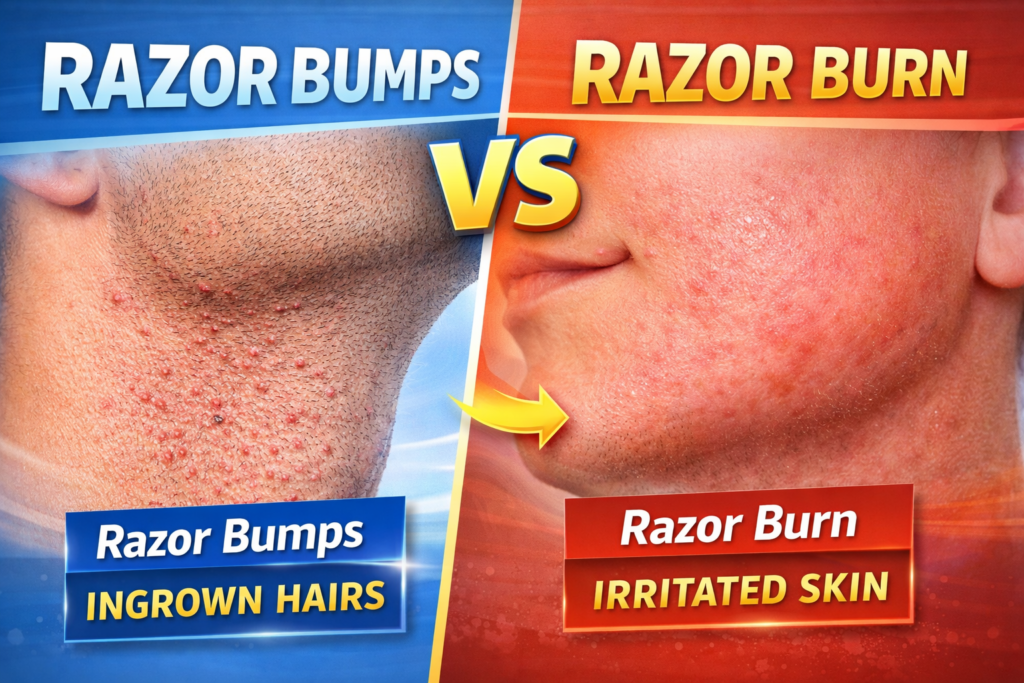
Many people confuse razor bumps with razor burn, but they are distinct conditions.
Razor Burn
- Appears immediately after shaving
- Causes stinging, redness, and surface irritation
- Results from friction and minor skin trauma
Razor Bumps
- Appear 24–72 hours later
- Present as raised, inflamed lesions
- Caused by trapped hairs
- May contain visible hair loops
Best ProductsFor Razor Bumps
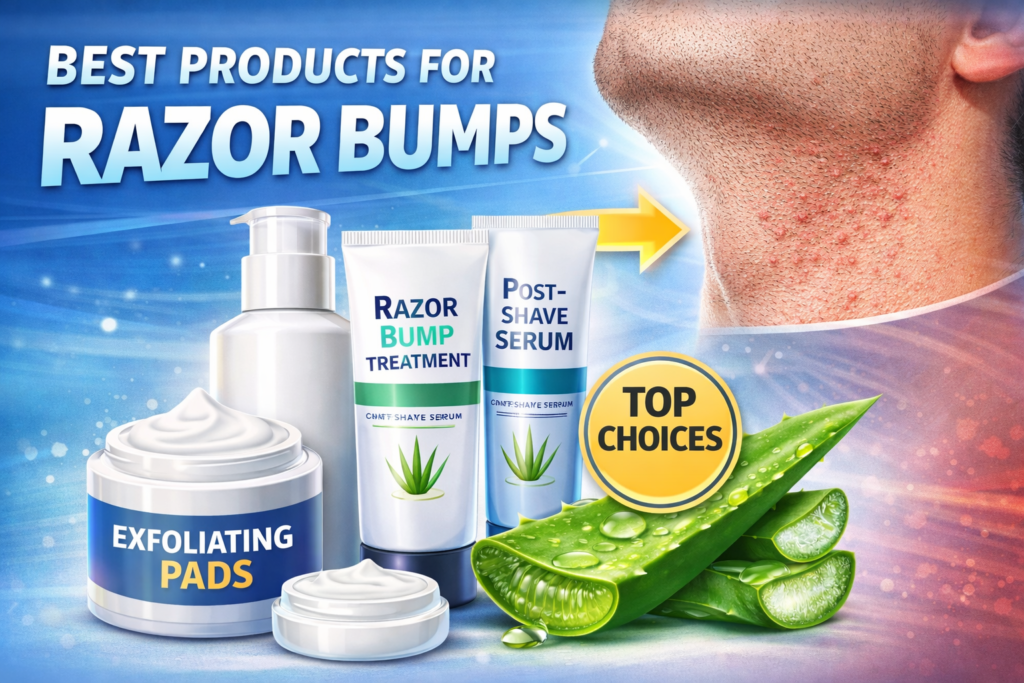
The best cream for razor bumps should accomplish three goals:
- Reduce inflammation
- Prevent follicle blockage
- Minimize bacterial growth
Key Ingredients to Look For
- Salicylic acid (BHA)
- Glycolic acid (AHA)
- Niacinamide
- Aloe vera
- Short-term hydrocortisone
- Benzoyl peroxide (if infection risk exists)
Salicylic acid works inside pores. Glycolic acid exfoliation removes surface buildup. Niacinamide strengthens the skin barrier and reduces redness.
Conclusion
Razor bumps are a common skin problem that affects many people across the US. They can cause redness, irritation, pain, and discomfort after shaving. Fortunately, simple skincare habits and proper shaving techniques can help prevent these bumps.
Using sharp razors, shaving correctly, moisturizing daily, and applying soothing products can improve skin health and reduce irritation. Natural remedies like aloe vera gel, tea tree oil, and coconut oil for skin may also help calm inflamed areas.
People dealing with repeated razor bumps should focus on a consistent skincare routine and consider alternative hair removal methods if needed. With the right care, smooth and healthy skin is possible.
FAQs About Razor Bumps
What causes razor bumps after shaving?
Razor bumps usually happen when shaved hair curls back into the skin and causes irritation or inflammation.
How long do razor bumps last?
Mild bumps may disappear within a few days, while severe irritation can take one to two weeks.
Does aloe vera help razor bumps?
Yes, aloe vera gel helps soothe redness, itching, and skin irritation after shaving.
Can exfoliation prevent razor bumps?
Yes, regular skin exfoliation removes dead skin cells and helps prevent ingrown hairs.
Are razor bumps the same as acne?
No, razor bumps are caused by shaving and ingrown hairs, while acne develops due to clogged pores and excess oil.
Is laser hair removal good for razor bumps?
Yes, laser hair removal can reduce hair growth and lower the risk of future irritation.
What is the best razor for sensitive skin?
A sharp single-blade razor or electric razor is often better for people with sensitive skin.
Can women get razor bumps?
Yes, women can develop razor bumps on legs, underarms, and bikini areas after shaving.
Should I stop shaving if I have razor bumps?
Yes, taking a short break from shaving allows the skin to heal faster.
Which skincare products help reduce razor bumps?
Products containing salicylic acid, moisturizers, and soothing aftershave creams can help reduce irritation and support healthy skin.