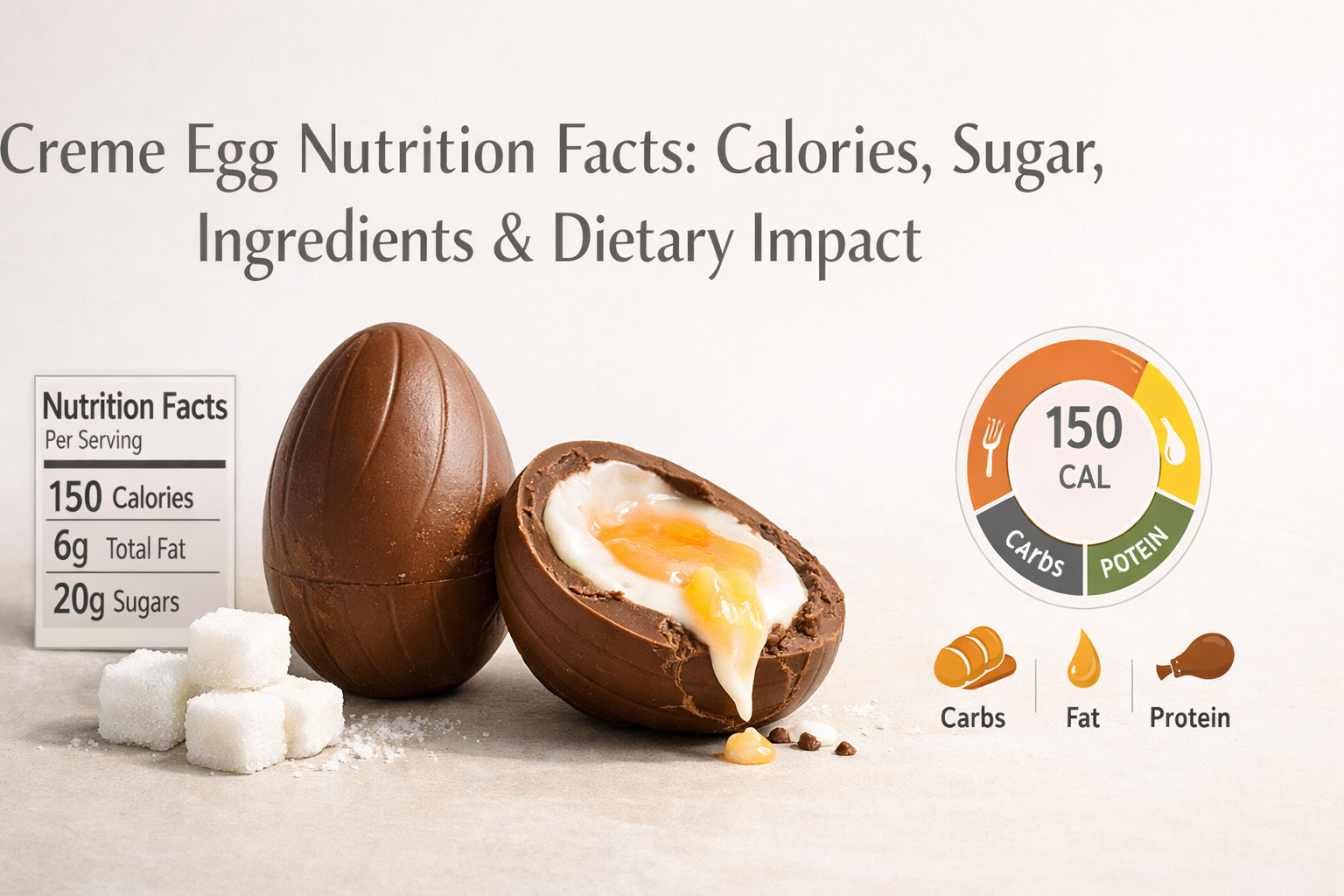
Understanding creme egg nutrition facts is essential for anyone monitoring calorie intake, sugar consumption, or overall dietary quality. Creme eggs are widely consumed seasonal chocolate products, particularly around Easter. While they are small in size, their sugar density and calorie concentration make them nutritionally significant.
This guide provides a comprehensive breakdown of calories, macronutrients, ingredients, sugar impact, dietary considerations, and comparisons with other chocolate products. The goal is to offer factual, structured, and practical information to help readers make informed decisions.
What Is a Creme Egg?
A creme egg is a milk chocolate confection with a soft fondant filling designed to resemble the white and yolk of an egg. The most recognized version is the Cadbury Creme Egg, produced by Cadbury.
It is typically sold in a 40g individual serving and is most commonly available during the Easter season.
Creme Egg Nutrition Facts (Standard 40g Serving)
Below is the approximate nutritional breakdown of a standard 40g creme egg:
| Nutrient | Amount per 40g | Approximate % Daily Value |
| Calories | 177 kcal | 9% |
| Total Fat | 6.1 g | 9% |
| Saturated Fat | 3.5 g | 18% |
| Carbohydrates | 26.5 g | 9% |
| Sugars | 26 g | 29% |
| Protein | 1.5 g | 3% |
| Salt | 0.06 g | 1% |
Note: Values may vary slightly by country due to formulation differences.
Key Nutritional Highlights
- High sugar concentration relative to portion size
- Moderate calorie density
- Low protein content
- Contains saturated fat from cocoa butter and milk
These figures provide the foundation for understanding creme egg nutrition facts in context.
Calorie Composition: Where Do the Calories Come From?
To better understand creme egg nutrition facts, it is useful to analyze calorie distribution.
Macronutrient Contribution
- Carbohydrates (primarily sugar): ~60% of total calories
- Fat: ~30% of total calories
- Protein: ~10% of total calories
Because most carbohydrates come from added sugars, the energy release is rapid rather than sustained.
Detailed Macronutrient Breakdown
1. Carbohydrates
Carbohydrates account for approximately 26.5 grams per egg.
Most of these carbohydrates are simple sugars, including:
- Sucrose
- Glucose syrup
- Invert sugar syrup
There is negligible dietary fiber in a creme egg, meaning digestion and absorption occur quickly.
2. Fat Content
Total fat per egg is about 6.1 grams.
Of this:
- Saturated fat: ~3.5 grams
- Unsaturated fat: Smaller proportion
Saturated fat contributes significantly to daily intake limits. Health authorities commonly recommend limiting saturated fat to around 20g per day for an average adult. One creme egg provides nearly 18% of that amount.
3. Protein
Protein content is low at approximately 1.5 grams.
This minimal protein does not significantly contribute to satiety or muscle maintenance. It primarily comes from milk solids in the chocolate coating.
Sugar Content and Daily Intake Guidelines
One of the most important aspects of creme egg nutrition facts is sugar content.
How Much Sugar Is in One Creme Egg?
A single 40g egg contains around 26 grams of sugar.
For reference:
- Many health organizations recommend limiting added sugar intake to 25–50 grams per day.
- One creme egg can meet or exceed the lower recommended limit.
Why Sugar Is So High
The fondant center is composed largely of sugar-based syrups. The smooth texture and sweetness require high sugar concentration.
This makes the product energy-dense but nutritionally limited.
Ingredients Explained
Understanding the ingredient list clarifies the nutritional profile.
Core Ingredients
- Milk chocolate (sugar, cocoa butter, cocoa mass, milk powder)
- Fondant filling (sugar, glucose syrup)
- Emulsifiers (e.g., soy lecithin)
- Flavorings
Additives and Functional Ingredients
- Emulsifiers improve texture and prevent separation.
- Flavorings maintain consistent taste.
- Glucose syrup enhances smooth consistency.
There are no significant vitamins or minerals added beyond those naturally present in milk and cocoa ingredients.
Micronutrient Profile
Creme eggs are not a meaningful source of essential vitamins or minerals.
They may provide small amounts of:
- Calcium (from milk solids)
- Trace iron (from cocoa mass)
However, these amounts are minimal and should not be relied upon for nutritional adequacy.
Comparison With Other Popular Chocolate Products
To contextualize creme egg nutrition facts, consider the comparison below.
| Product | Weight | Calories | Sugar | Fat |
| Creme Egg | 40g | 177 kcal | 26g | 6.1g |
| Dairy Milk Bar | 45g | 240 kcal | 25g | 13g |
| Snickers Bar | 50g | 245 kcal | 27g | 12g |
| Dark Chocolate (70%) | 40g | 220 kcal | 10g | 18g |
Observations
- Creme eggs contain less total fat than many chocolate bars.
- Sugar content is high relative to weight.
- Dark chocolate typically contains less sugar but more fat.
This comparison helps consumers understand positioning within the confectionery category.
Glycemic Impact and Blood Sugar Response
Due to high simple sugar content and minimal fiber, creme eggs have a rapid glycemic effect.
Possible Effects
- Quick blood glucose increase
- Short-term energy boost
- Potential post-consumption fatigue
Individuals with diabetes or insulin resistance should monitor portion sizes carefully and consult dietary guidelines.
Creme Eggs and Weight Management
When assessing creme egg nutrition facts for weight control, the following factors matter:
Calorie Density
- 177 calories in a small 40g portion
- Easy to consume quickly
- Low satiety value
Because protein and fiber are minimal, hunger may return shortly after consumption.
Practical Weight Management Tips
- Include within daily calorie limits.
- Avoid pairing with additional high-sugar desserts.
- Consider sharing or consuming half portions.
Moderation is essential.
Are Creme Eggs Suitable for Specific Diets?
1. Vegetarian Diet
Most versions are suitable for vegetarians, but ingredient verification is recommended.
2. Vegan Diet
Standard creme eggs contain milk and are not vegan.
3. Low-Carb Diet
With 26g of carbohydrates per serving, creme eggs are not compatible with low-carb or ketogenic diets.
4. Diabetic-Friendly Diet
Due to high sugar content, portion control is necessary. They are not considered diabetic-friendly foods.
Seasonal Consumption Patterns
Creme eggs are primarily marketed around Easter.
Seasonal availability can lead to increased consumption during a short period.
This concentrated exposure may increase sugar intake beyond usual levels.
Planning intake during seasonal peaks helps maintain dietary balance.
Health Considerations
Potential Concerns
- High added sugar intake
- Saturated fat contribution
- Limited nutritional value
When Occasional Consumption Is Acceptable
For individuals without metabolic disorders, moderate intake within calorie limits is generally manageable.
The key is frequency and portion size.
Step-by-Step Guide: How to Include Creme Eggs Responsibly
- Check nutritional label for updated values.
- Review total daily sugar intake.
- Allocate calories within meal planning.
- Avoid consuming on an empty stomach.
- Balance with fiber-rich foods later in the day.
This structured approach reduces negative dietary impact.
Label Reading Tips for Creme Eggs
When reviewing creme egg nutrition facts:
- Check serving size carefully.
- Confirm total sugars vs added sugars (if listed).
- Review saturated fat percentage.
- Consider cumulative daily intake.
Small confectionery items can have disproportionately high sugar values.
Frequently Asked Questions (FAQ)
1. How many calories are in a Cadbury Creme Egg?
A standard 40g Cadbury Creme Egg contains approximately 177 calories, though slight regional variations may occur.
2. How much sugar is in one creme egg?
There are about 26 grams of sugar in one creme egg, which approaches or exceeds lower daily added sugar recommendations.
3. Are creme eggs high in saturated fat?
Yes. Each egg contains around 3.5 grams of saturated fat, contributing nearly 18% of typical daily recommended intake.
4. Do creme eggs contain any nutritional benefits?
They provide minimal protein and trace minerals but are not considered nutrient-dense foods.
5. Can creme eggs cause blood sugar spikes?
Yes. Due to high simple sugar content and low fiber, they may lead to rapid increases in blood glucose.
6. How do creme egg nutrition facts compare to other Easter chocolates?
Creme eggs often contain more sugar per gram than many solid chocolate alternatives, though they may contain less total fat.
Key Takeaways on Creme Egg Nutrition Facts
- Approximately 177 calories per 40g egg
- Around 26 grams of sugar per serving
- Moderate total fat, with notable saturated fat
- Minimal protein and fiber
- Best suited for occasional consumption
Understanding creme egg nutrition facts allows individuals to make informed dietary choices and manage sugar intake effectively.
Conclusion
Creme egg nutrition facts show a high-sugar, moderate-fat confection designed primarily for seasonal enjoyment. With approximately 177 calories and 26 grams of sugar per serving, it represents a significant portion of daily added sugar intake.
While creme eggs can fit into a balanced diet when consumed occasionally, frequent intake may contribute to excessive sugar and calorie consumption. Careful portion control and awareness of total daily intake remain essential.
By reviewing labels, planning intake, and practicing moderation, consumers can enjoy creme eggs responsibly without compromising overall dietary goals.