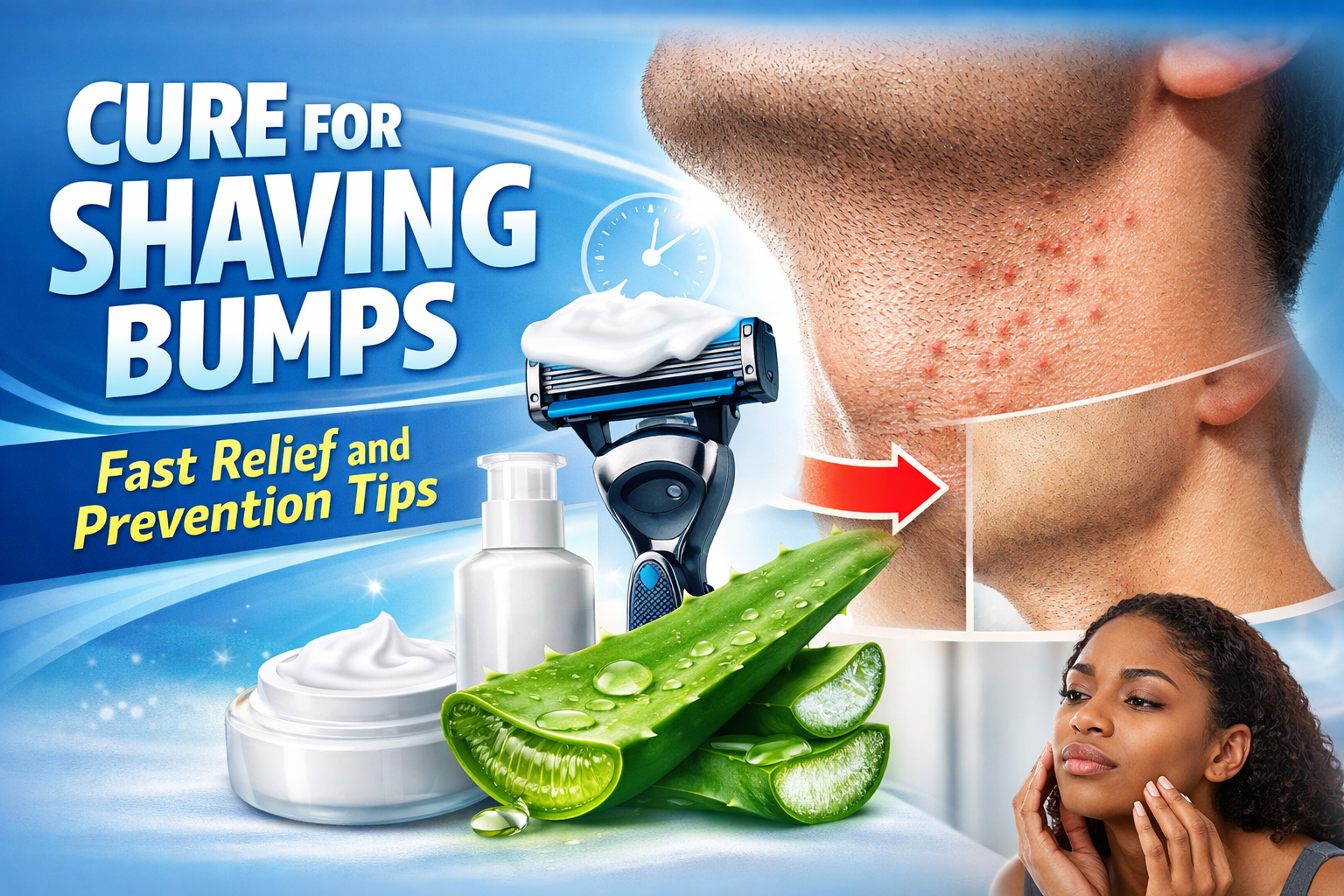
Shaving bumps develop when cut hairs curl back into the skin, triggering inflammation and ingrown hairs. The most effective cure combines correct shaving technique, targeted chemical exfoliation, anti-inflammatory treatment, and long-term hair reduction strategies. This guide explains fast relief, public-area care, prevention, and advanced dermatology solutions.
What Are Shaving Bumps?
Shaving bumps, medically referred to as pseudofolliculitis barbae, are inflamed lesions that form when shaved hair re-enters the skin instead of growing outward. The sharp hair tip pierces the surrounding tissue, creating a foreign-body inflammatory reaction inside the hair follicle.
Unlike acne, these bumps are mechanical in origin. They result from the interaction between hair structure and shaving trauma.
What Happens Beneath the Skin
After shaving:
- The blade cuts the hair at a sharp angle.
- Curly or coarse hair retracts slightly below the skin surface.
- The hair grows sideways or curls inward.
- The follicle becomes inflamed.
- Red, tender bumps form.
Over time, repeated inflammation may cause:
- Hyperpigmentation
- Scarring
- Thickened skin
- Persistent ingrown hair after shaving
Razor bumps commonly affect:
- Beard area
- Neck
- Underarms
- Legs
- Bikini line and pubic region
The condition affects all genders but appears more frequently in individuals with coarse, curly hair.
What Causes Razor Bumps?
Understanding the cause helps identify the most effective cure for shaving bumps.
1. Hair Structure
Curly hair bends back toward the skin more easily than straight hair. When shaved too closely, the hair shaft retracts and penetrates nearby skin tissue.
2. Close Shaving Techniques
- Multi-blade razors lift and cut hair below surface level.
- Stretching the skin before shaving creates a recessed hair tip.
- Shaving against the direction of growth increases hair re-entry.
3. Dead Skin Cell Buildup
When dead skin accumulates, it blocks the follicle opening. The growing hair becomes trapped beneath the surface.
4. Bacterial Involvement
Bacteria can enter micro-cuts created by the razor, worsening inflammation.
Why Do I Get Pimples After Shaving Pubic Hair?
The pubic area contains thick, coarse hair and sensitive skin. Tight clothing, sweat, and friction increase irritation. When hair is shaved too short, it curls inward and causes painful bumps that resemble pimples.
These are not typical acne lesions; they are inflamed follicles triggered by ingrown hair formation.
Razor Bumps vs Razor Burn
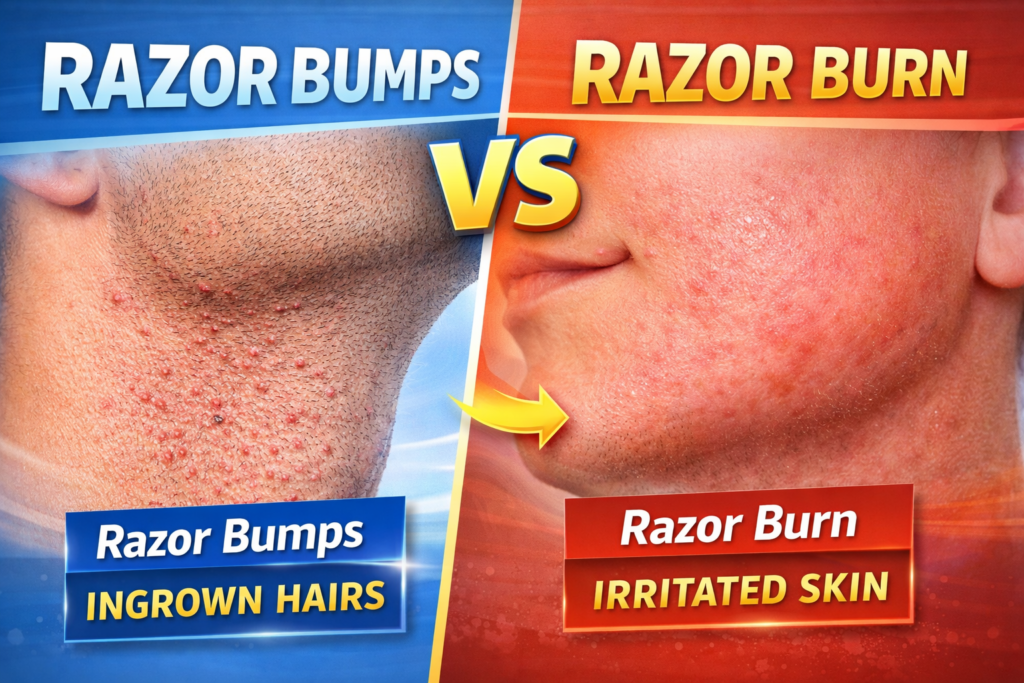
Many people confuse razor bumps with razor burn, but they are distinct conditions.
Razor Burn
- Appears immediately after shaving
- Causes stinging, redness, and surface irritation
- Results from friction and minor skin trauma
Razor Bumps
- Appear 24–72 hours later
- Present as raised, inflamed lesions
- Caused by trapped hairs
- May contain visible hair loops
Correct identification ensures proper treatment.
Fastest Ways to Remove Razor Bumps
When you need quick relief, focus on reducing inflammation and releasing trapped hairs safely.
Immediate Relief Protocol
Follow this step-by-step method:
- Stop shaving the affected area.
- Apply a warm compress for 10 minutes.
- Use salicylic acid to dissolve dead skin.
- Apply hydrocortisone cream sparingly.
- Keep the area clean and dry.
Visible improvement often begins within 24–48 hours.
Overnight Solutions
If you’re searching for how to get rid of razor bumps overnight, understand that complete elimination in one night is unlikely. However, you can significantly reduce redness and swelling.
Night Routine:
- Cleanse gently.
- Apply 1–2% salicylic acid for razor bumps.
- Wait 10 minutes.
- Apply a thin layer of hydrocortisone.
- Finish with a lightweight, non-comedogenic moisturizer.
Salicylic acid penetrates inside the follicle and breaks down debris. This accelerates hair release and reduces inflammation.
Avoid squeezing or digging at bumps. Manual trauma increases scarring risk.
Natural Remedies
Natural treatments help calm irritation but work best for mild cases.
- Aloe vera gel reduces inflammation.
- Diluted tea tree oil provides antibacterial action.
- Cold compress reduces swelling.
- Witch hazel tones irritated skin.
These methods soothe symptoms but may not free deeply embedded hairs.
Pubic Area Treatment
People frequently ask how to treat razor bumps on the pubic area. This region requires a delicate approach.
Best practices:
- Avoid tight underwear.
- Use fragrance-free cleansers.
- Apply salicylic acid sparingly.
- Perform gentle glycolic acid exfoliation twice weekly.
- Avoid heavy creams that trap moisture.
If bumps persist, consider trimming rather than shaving completely.
Never use harsh scrubs in the bikini region. The skin barrier there is thinner and prone to micro-tears.
Best Products for Razor Bumps
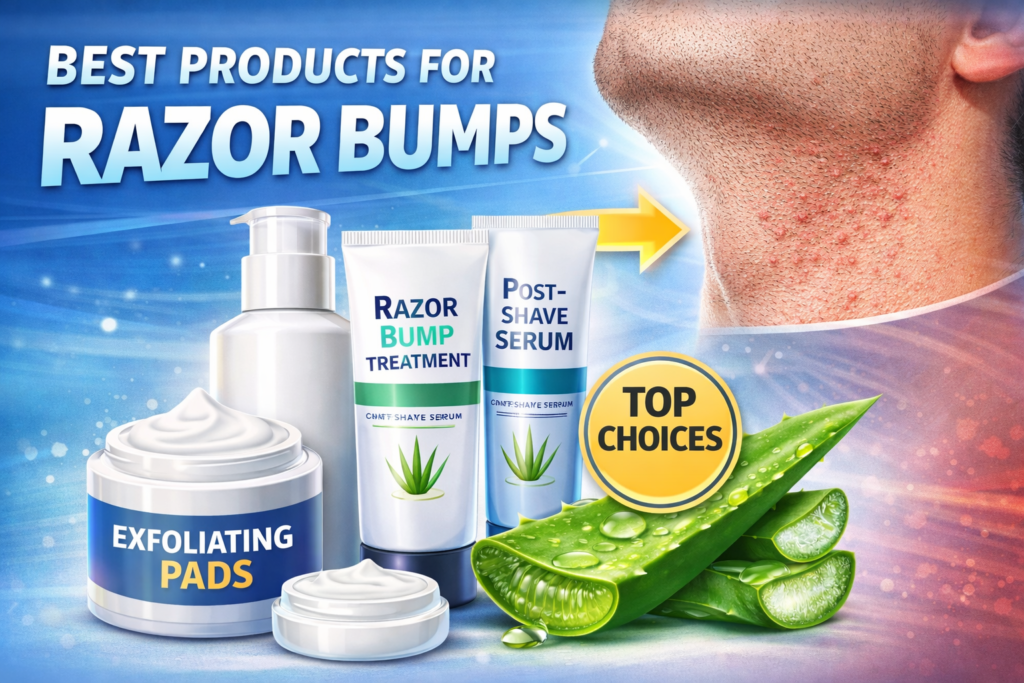
The best cream for razor bumps should accomplish three goals:
- Reduce inflammation
- Prevent follicle blockage
- Minimize bacterial growth
Key Ingredients to Look For
- Salicylic acid (BHA)
- Glycolic acid (AHA)
- Niacinamide
- Aloe vera
- Short-term hydrocortisone
- Benzoyl peroxide (if infection risk exists)
Salicylic acid works inside pores. Glycolic acid exfoliation removes surface buildup. Niacinamide strengthens the skin barrier and reduces redness.
Avoid heavy oils and thick occlusives immediately after shaving.
Prevention Strategies
Prevention offers the most reliable cure for shaving bumps over time.
1. Pre-Shave Preparation
- Shower with warm water for 5 minutes.
- Use shaving gel, not soap.
- Exfoliate 24 hours before shaving.
2. Correct Shaving Technique
- Use a sharp, single-blade razor.
- Shave in the direction of growth.
- Do not press hard.
- Avoid multiple passes.
- Do not stretch the skin.
3. Post-Shave Care
- Rinse with cool water.
- Apply alcohol-free toner.
- Use a lightweight moisturizer.
- Wait 24 hours before applying strong acids.
4. Reduce Frequency
Shaving daily increases risk. Allow hair to grow slightly between sessions.
If you constantly experience ingrown hair after shaving, switching to an electric trimmer may reduce close-cut trauma.
Chemical Exfoliation: The Science Behind Smooth Skin
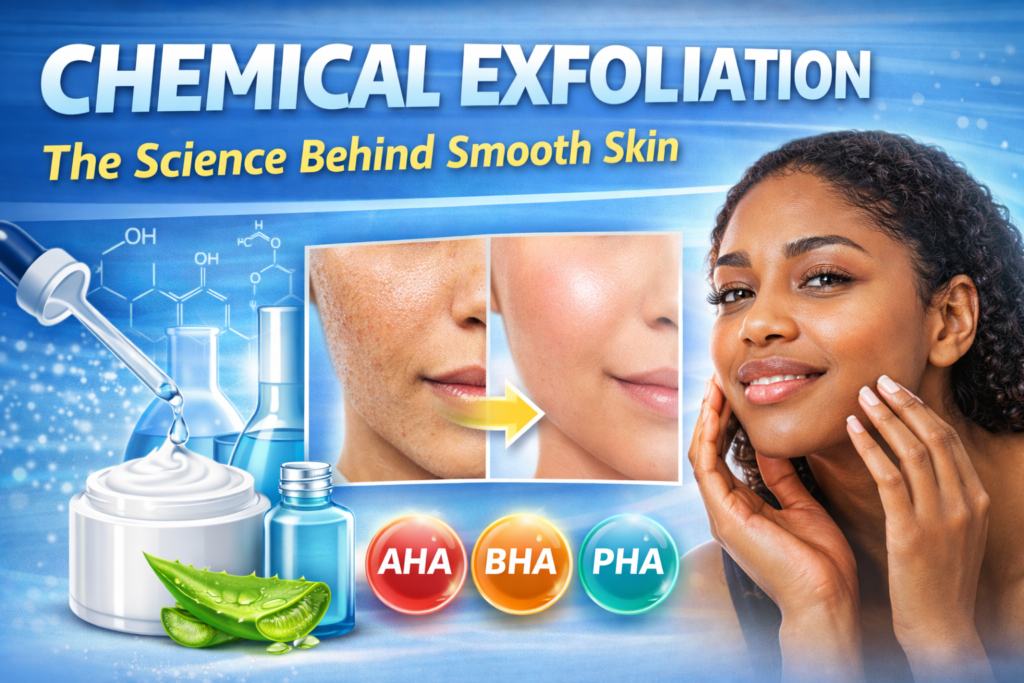
Chemical exfoliation improves follicular turnover.
Salicylic Acid
- Oil-soluble
- Penetrates into hair follicles
- Breaks down debris
- Reduces inflammation
Ideal for active bumps.
Glycolic Acid
- Water-soluble
- Loosens dead surface cells
- Prevents hair entrapment
- Improves hyperpigmentation
Use 2–3 times weekly to maintain smooth skin.
Overuse may irritate sensitive areas, so begin gradually.
Long-Term and Medical Treatments
If bumps become chronic, you may need advanced intervention.
Dermatologist Treatment for Razor Bumps
A dermatology professional may recommend:
- Topical retinoids to normalize cell turnover
- Prescription antibiotics
- Corticosteroid injections
- Chemical peels
- Laser therapy
Pseudofolliculitis barbae treatment often includes retinoids because they prevent follicular plugging.
Seek care if you experience:
- Persistent dark spots
- Thickened scars
- Painful swelling
- Signs of infection
Early treatment prevents permanent damage.
Laser Hair Removal
Laser therapy reduces hair growth at the follicle level. It decreases hair density and thickness, preventing re-entry into the skin.
Laser hair removal cost varies depending on location and treatment area.
Average pricing:
- Small areas: $100–$300 per session
- Medium areas: $250–$400 per session
- Large areas: $300–$600 per session
Most patients require 6–8 sessions spaced several weeks apart.
While the initial cost may seem high, many people find it cost-effective long-term compared to ongoing shaving and treatment products.
Laser therapy remains one of the most reliable long-term cures for shaving bumps.
Special Considerations for Different Body Areas
Beard Area
Men with coarse beard hair often experience chronic pseudofolliculitis. Switching to clippers or maintaining short stubble significantly reduces recurrence.
Underarms
Sweat and friction increase irritation. Use gentle exfoliation and breathable clothing.
Legs
Dry shaving commonly triggers bumps. Always shave after showering.
Bikini Line
Avoid waxing if you frequently develop ingrown hairs. Consider laser reduction for chronic cases.
Common Mistakes That Worsen Razor Bumps
- Dry shaving
- Using dull blades
- Sharing razors
- Shaving daily
- Picking at bumps
- Using heavy body oils immediately after shaving
Each of these behaviors increases inflammation and follicle trauma.
When to See a Dermatologist
You should consult a specialist if:
- Bumps do not improve after 2–3 weeks
- You notice spreading redness
- Pus develops
- Scars form
- Hyperpigmentation persists
Professional evaluation ensures you receive targeted pseudofolliculitis barbae treatment rather than trial-and-error care.
FAQs
What is the most effective cure for shaving bumps?
The most effective approach combines proper shaving technique, consistent chemical exfoliation, and anti-inflammatory treatment. Salicylic acid clears follicles, while hydrocortisone reduces swelling. Long-term solutions include retinoids or laser hair reduction for chronic cases.
How can I get rid of razor bumps overnight?
You can reduce redness significantly by applying a warm compress, followed by salicylic acid and a thin layer of hydrocortisone. Avoid shaving and friction. While complete removal overnight is unlikely, inflammation often decreases by morning.
Why do I get pimples after shaving my pubic hair?
Pubic hair is coarse and tightly curled. After shaving, sharp hair tips re-enter the skin and trigger inflammation. Sweat and friction worsen the reaction. These bumps resemble pimples but are inflamed follicles caused by ingrown hairs.
What prevents ingrown hair after shaving?
Exfoliating regularly, shaving in the direction of growth, using a single-blade razor, and avoiding skin stretching prevent most ingrown hairs. Consistent glycolic acid exfoliation reduces dead skin buildup that traps hair beneath the surface.
Is laser hair removal worth the cost?
For people with chronic razor bumps, laser treatment significantly reduces hair density and recurrence. Although laser hair removal cost varies, it often provides long-term savings compared to ongoing products and treatments.
When should I seek dermatologist treatment?
Seek professional care if bumps become painful, infected, or leave dark marks and scars. Dermatologist treatment for razor bumps may include prescription retinoids, antibiotics, or advanced procedures that prevent permanent skin damage.
Final Takeaway
The ultimate cure for shaving bumps requires a strategic approach. Treat active inflammation with salicylic acid and soothing agents. Prevent recurrence with proper shaving technique and consistent exfoliation. For severe or chronic cases, dermatology-guided care or laser hair reduction offers long-term relief. Smooth skin depends on prevention, precision, and informed treatment choices.