
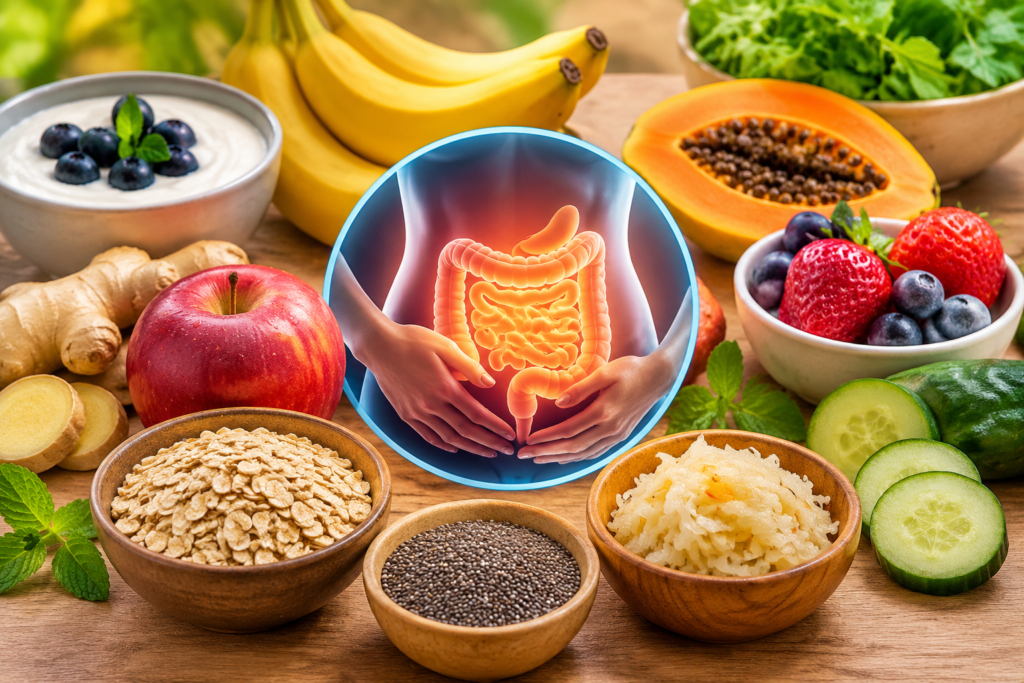
Maintaining a healthy digestive system is essential for overall wellness, nutrient absorption, and everyday comfort. Many adults across the USA experience digestive concerns such as bloating, constipation, gas, and stomach discomfort because of irregular eating habits, low-fiber diets, and insufficient hydration. Choosing the right Foods for Better Digestion can help support normal digestive functions and encourage healthier eating habits. At WebThreds, readers can explore practical nutrition information and wellness guidance to make informed food choices. Whether you live in New York, California, Texas, Florida, or another part of the United States, including nutritious and fiber-rich foods in your daily meals can be a simple step toward improving digestive health.
Fiber-Rich Fruits and Vegetables for Healthy Digestion
Fruits and vegetables are important components of a balanced diet because they provide dietary fiber, vitamins, minerals, and water. Apples, pears, berries, bananas, carrots, broccoli, spinach, and sweet potatoes are useful options to include in everyday meals. Dietary fiber helps support regular bowel movements and maintain digestive health. Some fruits also contain soluble fiber, which can help support healthy gut function. Adults should increase fiber intake gradually and drink enough water to help their digestive systems adjust comfortably. Shopping at local grocery stores and farmers markets across the USA can make fresh produce more accessible. WebThreds encourages readers to explore nutritious food choices that support a balanced diet.
Whole Grains and Legumes That Support Digestive Health
Whole grains and legumes are valuable sources of dietary fiber that can support normal digestion. Foods such as oatmeal, brown rice, whole-wheat bread, quinoa, beans, chickpeas, and lentils can help improve daily fiber intake. Fiber supports bowel regularity and may help reduce constipation when combined with adequate fluid consumption. Replacing some refined grains with whole-grain alternatives is a practical way to improve everyday nutrition. People with sensitive digestive systems should introduce high-fiber foods gradually because sudden increases may cause temporary gas or bloating. Foods for Better Digestion should be selected according to individual tolerance, nutritional needs, and eating preferences.
Probiotic and Fermented Foods for Gut Health
Certain fermented foods contain beneficial microorganisms that may support a healthy gut environment. Yogurt containing live and active cultures, kefir, and some fermented vegetables are examples of foods that can be included in a balanced diet. Probiotic foods may help support the natural balance of microorganisms in the digestive tract, although their effects can vary depending on the specific product and individual. When shopping in American supermarkets, readers can check food labels for live cultures and added sugar. Unsweetened yogurt and suitable fermented foods can be convenient additions to breakfast or snacks. At WebThreds, readers can discover useful nutrition guidance about fermented foods and their potential role in digestive wellness.
Hydrating Foods and Healthy Eating Habits
Proper hydration plays an important role in digestive health. Water helps the digestive system process food and supports normal bowel movements, particularly when combined with adequate dietary fiber. Cucumbers, watermelon, oranges, strawberries, and other water-rich foods can contribute to daily fluid intake. Drinking water regularly throughout the day is also important, especially during warmer weather in states such as Florida, Arizona, and Texas. Eating slowly, chewing food properly, avoiding overeating, and maintaining regular meal times can further support comfortable digestion. Choosing balanced meals instead of relying frequently on heavily processed foods may also help improve overall nutritional quality.
Common Digestive Problems and Choosing the Right Foods
Different foods affect people in different ways, so identifying individual food sensitivities can be helpful when managing digestive discomfort. Some individuals experience bloating after consuming dairy products, beans, onions, or certain high-fiber vegetables. Keeping a food diary can help identify patterns between meals and digestive symptoms. People with conditions such as irritable bowel syndrome (IBS), lactose intolerance, or other digestive disorders may need personalized dietary advice from a registered dietitian or healthcare professional. Persistent abdominal pain, blood in the stool, unexplained weight loss, or ongoing digestive problems should receive medical attention. WebThreds aims to provide practical health and nutrition information that helps readers make informed decisions about their daily eating habits.
Conclusion
Choosing nutritious fruits, vegetables, whole grains, legumes, fermented foods, and adequate fluids can support better digestive health. Developing balanced eating habits and understanding individual food tolerance are important steps toward long-term wellness. Through WebThreds, readers across the USA can explore practical nutrition guidance and discover healthier ways to support their digestive systems.
Frequently Asked Questions (FAQs)
1. What are the best foods for better digestion?
Apples, bananas, berries, vegetables, oatmeal, whole grains, beans, lentils, and yogurt containing live cultures are useful options that can support digestive health.
2. Do fruits help improve digestion?
Yes. Many fruits provide dietary fiber and water, which can support regular bowel movements and normal digestive functions.
3. Is yogurt good for digestive health?
Yogurt containing live and active cultures may support gut health by providing beneficial microorganisms. Individual results can vary depending on the product and personal digestive needs.
4. Which foods should I avoid if I experience bloating?
Foods that trigger bloating vary between individuals. Some people may be sensitive to beans, certain vegetables, dairy products, or carbonated drinks. Identifying personal triggers can help guide better food choices.