
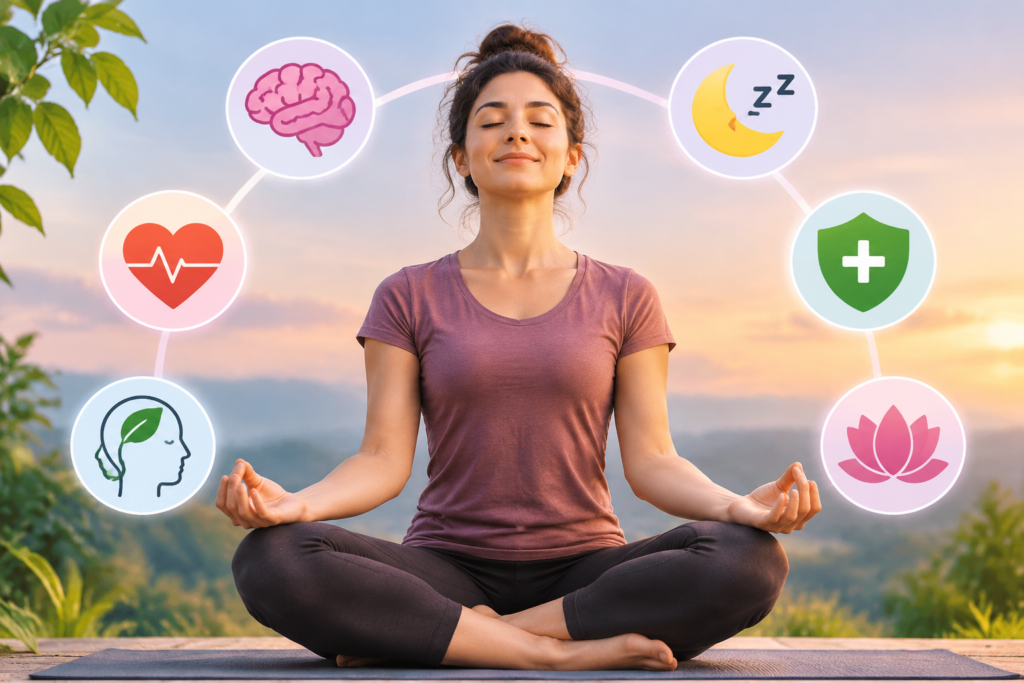
Meditation is a simple wellness practice that involves focusing attention, developing awareness, and creating a calmer state of mind. In today’s busy lifestyle, many people experience daily pressure because of work responsibilities, family commitments, financial concerns, and personal challenges. Understanding the Benefits of Meditation can encourage individuals to include mindfulness and relaxation practices in their everyday routines. Regular meditation may help improve emotional awareness, manage everyday stress, and support better concentration. It does not require expensive equipment, special facilities, or advanced experience. People can practice meditation at home, in a quiet outdoor space, or during a short break at work. WebThreds provides helpful lifestyle information to help readers understand meditation and explore practical ways to improve their overall well-being.
How Meditation Helps Reduce Stress and Anxiety
One of the most recognized benefits of meditation is its potential to support stress management. During meditation, individuals focus on breathing, present experiences, or specific thoughts instead of becoming overwhelmed by everyday distractions. Mindfulness meditation can help people recognize stressful thoughts without immediately reacting to them. Deep breathing and guided relaxation exercises may also encourage a calmer physical response. For example, spending five to ten minutes focusing on slow breathing after a demanding workday can provide an opportunity to relax. People across the USA who manage busy professional schedules or family responsibilities may find short meditation sessions useful as part of their daily wellness routines. However, meditation is not a replacement for professional treatment when someone experiences persistent anxiety or other mental health concerns.
Benefits of Meditation for Focus and Concentration
Meditation can also support attention, concentration, and mental awareness. Modern lifestyles involve constant notifications, digital distractions, and multiple responsibilities that can make it difficult to focus on one activity. Practicing mindfulness encourages individuals to bring their attention back to the present moment whenever their minds become distracted. Over time, this practice may help develop better awareness of thoughts and improve the ability to concentrate on everyday tasks. Students can use short meditation sessions before studying, while professionals may find them helpful before starting important projects or meetings. Even a few minutes of mindful breathing can create a useful pause between demanding activities. WebThreds encourages readers to explore meditation as a practical habit for developing greater focus and maintaining a balanced lifestyle.
Meditation and Its Role in Emotional Well-Being
Emotional wellness is another important area where meditation may provide support. Regular mindfulness practice can help individuals become more aware of their emotions, thoughts, and reactions. This awareness may make it easier to respond thoughtfully during challenging situations instead of reacting automatically. Loving-kindness meditation, for example, focuses on developing feelings of kindness and compassion toward oneself and others. Guided meditation can also provide a structured way for beginners to explore relaxation and emotional awareness. People living in busy American cities such as New York, Los Angeles, Chicago, and Houston can use meditation as a convenient personal wellness activity without needing to travel to a specialized location. It is important to remember that individual experiences differ, and meditation may not feel equally comfortable or effective for everyone.
How to Start a Simple Daily Meditation Routine
Starting meditation does not require previous experience or complicated techniques. Choose a quiet and comfortable place where you can sit without unnecessary interruptions. Begin with a short session of five minutes and focus your attention on your natural breathing. If your mind wanders, gently bring your attention back to your breath without criticizing yourself. You can gradually increase the duration as you become more comfortable with the practice. Beginners may also explore guided meditation applications, mindfulness recordings, or online meditation sessions. Morning meditation can help establish a peaceful start to the day, while evening sessions may provide an opportunity to relax before bedtime. Consistency is generally more important than trying to meditate for long periods immediately.
Different Types of Meditation for Different Lifestyle Needs
There are several meditation techniques, allowing individuals to choose a method that matches their preferences and personal goals. Mindfulness meditation focuses on present-moment awareness, while guided meditation uses spoken instructions to help participants relax and concentrate. Transcendental Meditation involves silently repeating a specific mantra as part of a structured practice. Body scan meditation encourages awareness of physical sensations, while breathing meditation focuses attention on inhaling and exhaling. Some people also enjoy walking meditation, which combines gentle movement with mindfulness. These practices can be explored at home, through community wellness programs, or with qualified meditation instructors. WebThreds helps readers discover different meditation approaches and understand how they may fit into everyday self-care routines.
Conclusion
Meditation is an accessible wellness practice that may support stress management, concentration, emotional awareness, and relaxation. Whether you choose mindfulness, guided meditation, or breathing exercises, starting with a few minutes each day can help establish a consistent routine. WebThreds provides practical information about the Benefits of Meditation to help readers explore healthier habits and support their overall well-being.
Frequently Asked Questions (FAQs)
1. What are the main Benefits of Meditation?
Meditation may help manage everyday stress, improve mindfulness, support concentration, encourage emotional awareness, and promote relaxation.
2. How long should beginners meditate every day?
Beginners can start with five to ten minutes daily. As they become more comfortable, they can gradually increase their meditation time according to their preferences.
3. Is meditation helpful for reducing stress?
Yes. Mindfulness and breathing meditation may help individuals manage everyday stress by encouraging relaxation and greater awareness of their thoughts and emotions.
4. What is the best time of day to meditate?
There is no single best time for everyone. Morning meditation can help establish a calm daily routine, while evening meditation may provide an opportunity to relax before bedtime.