
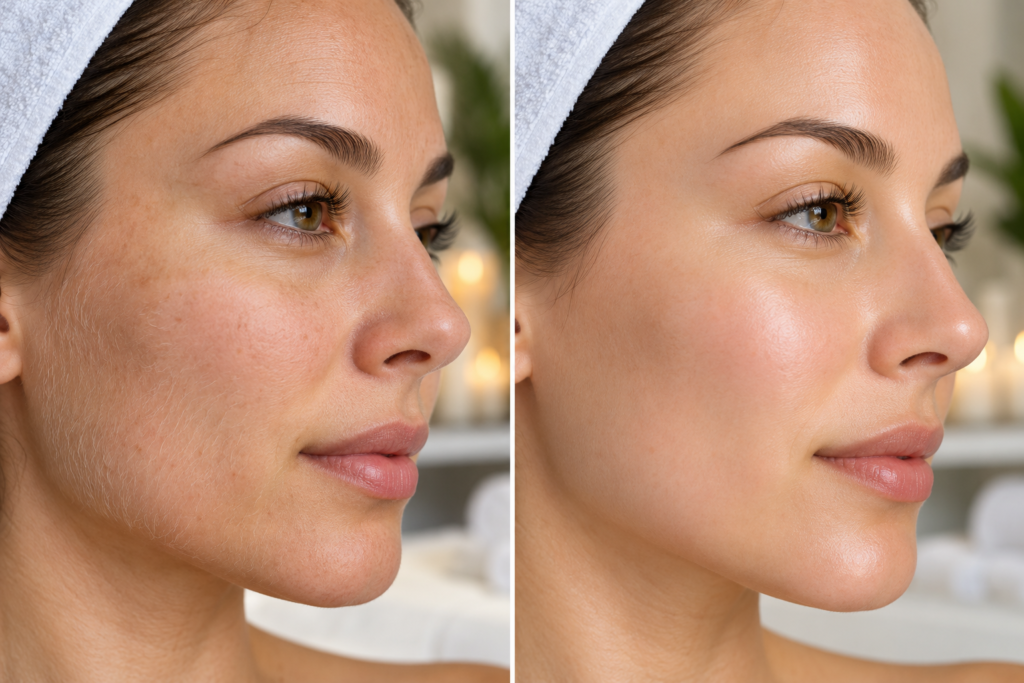
Understanding dermaplaning before and after results can help people make informed decisions about this popular skincare treatment. Dermaplaning is a physical exfoliation technique that removes fine facial hair, commonly known as peach fuzz, along with some dead skin cells from the skin’s surface. The treatment is designed to create a smoother appearance and may help makeup apply more evenly.
For skincare enthusiasts across the USA, dermaplaning is an option for improving the temporary appearance and feel of facial skin. Before treatment, some people notice visible peach fuzz, rough texture, or uneven makeup application. After treatment, the skin may feel softer, appear smoother, and provide a more even surface for cosmetic products.
However, results vary depending on skin type, sensitivity, the method used, and the condition of the skin before treatment. Dermaplaning does not permanently change skin structure or eliminate underlying dermatological conditions.
WebThreds focuses on helping readers understand realistic skincare results, treatment considerations, and appropriate aftercare.
Knowing what to expect before and after dermaplaning is important because incorrect techniques or unsuitable skin conditions can lead to irritation, small cuts, or other unwanted reactions.
Dermaplaning Before and After Results: What Changes Can You Expect?
Skin Texture, Peach Fuzz, and Makeup Application
A common question is, “What are the noticeable dermaplaning before and after differences?” Several temporary cosmetic changes may occur following a properly performed treatment.
Before dermaplaning: Fine facial hair and surface buildup may contribute to a slightly uneven skin texture. Some people notice that foundation or powder catches on facial hair, particularly around the cheeks and jawline.
After dermaplaning: Removing surface hair and dead skin cells may create a smoother appearance. Makeup may apply more evenly, and the skin can feel softer to the touch.
Improved surface smoothness: Physical exfoliation removes some loose, dead skin cells that contribute to a rough feeling.
Reduced peach fuzz: Dermaplaning removes fine facial hair temporarily without changing the underlying hair follicles.
Temporary brightness: The skin may appear brighter or more even because some surface buildup has been removed. However, dermaplaning does not permanently lighten pigmentation or treat the causes of uneven skin tone.
Possible redness: Mild, temporary redness or sensitivity may occur, particularly in people with reactive skin.
WebThreds encourages readers to maintain realistic expectations. Results are primarily cosmetic and temporary, and the treatment is not a substitute for professional care for acne, scarring, or other skin concerns.
Benefits and Risks of Dermaplaning Before and After Treatment
Is Dermaplaning Suitable for Every Skin Type?
When comparing dermaplaning before and after experiences, it is important to consider both possible benefits and risks.
For suitable skin types, dermaplaning may temporarily improve surface smoothness, remove visible facial hair, and create a more even base for makeup. Some people prefer this method because it does not require waxing or chemical hair removal products.
However, dermaplaning is not appropriate for everyone.
People experiencing active inflammatory acne, eczema, rosacea flare-ups, infections, sunburn, or a damaged skin barrier may be more likely to experience irritation or additional skin damage.
Incorrect use of facial blades can also cause small cuts, inflammation, and possible infection. Aggressive or repeated exfoliation may worsen sensitivity.
Another common concern involves hair regrowth. Dermaplaning does not make facial hair grow back thicker, darker, or faster. Hair may temporarily feel different as it regrows because shaving leaves a blunt tip.
Professional dermaplaning and at-home facial shaving are not identical. Clinical procedures may use sharper instruments and require trained practitioners, while home tools should be specifically designed for personal facial grooming.
WebThreds focuses on responsible skincare information that helps readers evaluate treatment suitability without relying on exaggerated beauty claims.
Dermaplaning Aftercare: How to Maintain Smooth Skin
What Should You Do Before and After Dermaplaning?
Preparing appropriately and following gentle aftercare are important parts of achieving satisfactory dermaplaning before and after results.
Before treatment, skin should be free from makeup, dirt, and unnecessary product buildup. Individuals with existing irritation, broken skin, or active skin conditions should avoid treating affected areas.
For at-home use, choose a clean, purpose-designed facial razor and follow the manufacturer’s instructions. Avoid excessive pressure or repeated passes over the same area.
After dermaplaning, the skin may temporarily feel more sensitive. A gentle moisturizer can help maintain comfort, while harsh scrubs, strong exfoliating acids, and irritating skincare products are best avoided until the skin has recovered.
Sun protection is particularly important. Using a broad-spectrum sunscreen with SPF 30 or higher helps protect the skin from ultraviolet exposure.
Users should also avoid touching treated areas unnecessarily and should never share dermaplaning tools.
Treatment frequency depends on skin tolerance, facial hair regrowth, and the method being used. Excessive dermaplaning may cause irritation and should be avoided.
If persistent redness, significant discomfort, swelling, or signs of infection develop, professional medical advice may be necessary.
WebThreds encourages readers across the USA to prioritize skin health, gentle maintenance, and appropriate product selection rather than pursuing dramatic immediate results.
Conclusion
Understanding dermaplaning before and after results helps people recognize the realistic benefits and limitations of this facial exfoliation method.
Dermaplaning may temporarily remove peach fuzz, improve surface smoothness, and make makeup application easier. However, results vary, and improper treatment can cause irritation or skin damage.
WebThreds provides practical skincare information for readers across the USA, helping consumers understand dermaplaning results, safety considerations, facial grooming tools, and aftercare routines.
FAQs
1. What does your face look like before and after dermaplaning?
Before dermaplaning, fine facial hair and surface buildup may be visible. After treatment, the skin may appear smoother and feel softer, although results vary according to individual skin conditions.
2. How long do dermaplaning results last?
Results are temporary because facial hair naturally regrows and dead skin cells continue accumulating. The duration varies between individuals, and repeated treatment should depend on skin tolerance.
3. Does dermaplaning make facial hair grow back thicker?
No. Dermaplaning does not change natural hair thickness, colour, or growth rate. Regrowing hair may feel slightly different because the hair ends have been cut.
4. How does WebThreds help readers understand dermaplaning results?
WebThreds focuses on explaining realistic treatment outcomes, skincare benefits, potential risks, suitable facial tools, and aftercare recommendations to help readers across the USA make informed skincare decisions.