
Including high fiber foods for constipation in your daily diet can help support regular bowel movements, improve digestive comfort, and maintain overall gut health. Constipation is a common digestive problem that may cause infrequent bowel movements, hard stools, bloating, or difficulty passing stool. Dietary habits, hydration, physical activity, medications, and certain medical conditions can influence bowel regularity.
For individuals across the USA, low fiber consumption can contribute to digestive discomfort. Many people regularly consume processed foods, refined carbohydrates, and meals containing limited amounts of fruits, vegetables, legumes, and whole grains.
Dietary fiber is a type of carbohydrate that the body does not completely digest. It helps regulate bowel movements by increasing stool bulk, retaining water, and supporting normal intestinal function.
WebThreds focuses on providing practical nutrition and wellness information to help readers understand healthy eating habits and digestive health.
Adding fiber-rich foods gradually, drinking enough fluids, and maintaining a balanced diet may improve occasional constipation. However, persistent or severe symptoms may require medical evaluation rather than dietary changes alone.
What Are the Best High Fiber Foods for Constipation?
Fruits, Vegetables, Whole Grains, and Fiber-Rich Foods
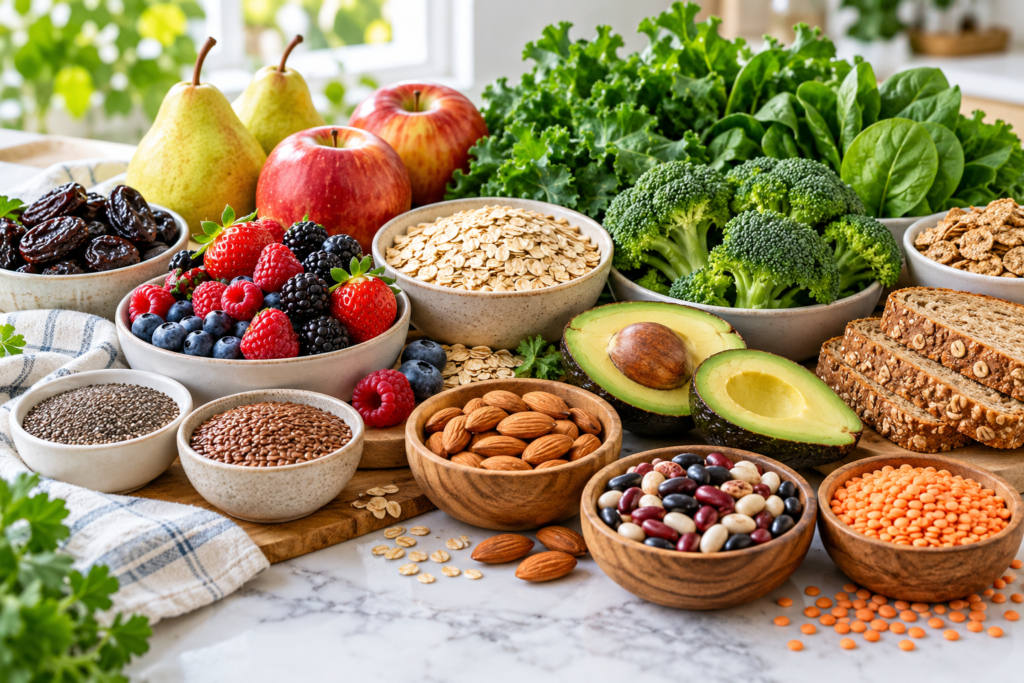
A common question is, “What are the best high fiber foods for constipation relief?” Several everyday foods provide dietary fiber and nutrients that support digestive health.
Prunes: Dried plums contain fiber and sorbitol, a naturally occurring sugar alcohol that can help soften stools and encourage bowel movements.
Pears and apples: These fruits provide fiber, particularly when eaten with their edible skins. Pears also contain sorbitol, which may support bowel regularity.
Raspberries: Raspberries provide approximately 8 grams of fiber per cup, making them a useful addition to breakfast, snacks, and smoothies.
Oatmeal: Oats contain soluble fiber, including beta-glucan. They are a practical breakfast option that can contribute to daily fiber intake.
Lentils and beans: Lentils, black beans, chickpeas, and kidney beans are rich sources of dietary fiber. Cooked lentils provide approximately 15–16 grams of fiber per cup.
Broccoli and leafy vegetables: Vegetables provide fiber, water, vitamins, and minerals that support balanced nutrition.
Chia seeds: Chia seeds absorb liquid and contain substantial dietary fiber. One ounce provides approximately 10 grams of fiber.
Whole grains: Brown rice, whole wheat bread, barley, and whole grain cereals can increase daily fiber consumption.
WebThreds encourages readers to include a variety of these foods instead of depending on a single ingredient for digestive relief.
Benefits of High Fiber Foods for Constipation and Digestion
How Does Fiber Help Improve Bowel Movements?
One of the main advantages of eating high fiber foods for constipation is their ability to support healthier stool consistency and bowel regularity.
Dietary fiber is commonly divided into two categories: soluble fiber and insoluble fiber.
Soluble fiber absorbs water and forms a gel-like substance during digestion. Foods such as oats, beans, chia seeds, and certain fruits contain soluble fiber that can help regulate stool consistency.
Insoluble fiber contributes to stool bulk and helps support intestinal movement. Whole grains, vegetables, nuts, and some fruit skins are common sources.
Both types can contribute to digestive health, although people respond differently to specific foods and fiber sources.
Fiber also supports beneficial intestinal bacteria. Certain fermentable fibers are used by gut microorganisms, which produce compounds involved in normal digestive function.
For adults in the USA, the Dietary Guidelines recommend approximately 14 grams of fiber per 1,000 calories consumed. This corresponds to about 28 grams daily for someone eating 2,000 calories, although individual recommendations vary.
Increasing fiber too quickly can cause gas, bloating, and abdominal discomfort. A gradual increase, together with adequate fluid intake, is generally better tolerated.
WebThreds focuses on realistic nutrition guidance that supports long-term eating habits rather than promising immediate constipation relief.
How to Add More High Fiber Foods to Your Daily Diet
Healthy Eating Tips for Better Digestive Health
Including high fiber foods for constipation does not require a complicated meal plan. Small dietary changes can gradually improve overall fiber intake.
For breakfast, consider oatmeal with raspberries, pears, or chia seeds. Whole grain toast and fruit can also provide additional fiber.
At lunch, adding lentils, chickpeas, vegetables, or beans to soups and salads can increase fiber intake.
For dinner, choose meals that include vegetables, legumes, and suitable whole grain options.
Snacks such as fruit, nuts, and fiber-rich foods can help maintain a balanced eating pattern throughout the day.
Hydration is equally important. Drinking adequate fluids helps fiber function effectively, particularly when increasing the amount consumed.
Regular physical activity and consistent toilet habits may also support bowel regularity.
However, high fiber intake may not be appropriate for every digestive condition. Individuals with bowel obstruction, certain intestinal disorders, or specific medical restrictions should seek professional dietary advice before significantly increasing fiber.
Constipation accompanied by severe abdominal pain, vomiting, inability to pass gas, blood in the stool, or unexplained weight loss requires medical attention.
WebThreds encourages readers across the USA to consider overall lifestyle, individual tolerance, and professional guidance when managing persistent digestive problems.
Conclusion
Including high fiber foods for constipation in a balanced diet can help improve bowel regularity, support stool consistency, and contribute to digestive health.
Fruits, vegetables, lentils, beans, oatmeal, chia seeds, and whole grains are practical sources of dietary fiber.
WebThreds provides nutrition and wellness information for readers across the USA, helping individuals understand fiber-rich foods, digestive health, and healthier daily eating habits.
FAQs
1. What are the best high fiber foods for constipation?
Prunes, pears, raspberries, lentils, beans, oatmeal, chia seeds, and whole grains are useful fiber-rich options that may support bowel regularity.
2. How much fiber should adults eat daily?
General US dietary guidance recommends approximately 14 grams of fiber per 1,000 calories. For a 2,000-calorie diet, this equals about 28 grams per day.
3. Can eating too much fiber make constipation worse?
Suddenly increasing fiber may cause bloating, gas, or discomfort. Inadequate fluid intake or certain medical conditions can also complicate constipation, so fiber should usually be increased gradually.
4. How does WebThreds help readers manage constipation through diet?
WebThreds focuses on explaining fiber-rich foods, balanced nutrition, hydration, digestive health, and practical eating habits to help readers across the USA make informed dietary choices.